Who Aligns Whom?
If machines are meant to learn our values, who decides what those values are?
HNT Investigation
“Alignment is not merely a technical problem. It is a question of power.”
The Most Comfortable Illusion of the AI Age
Almost every presentation about modern AI ends with the same promise:
“We need to align AI with human values.”
It sounds reasonable.
Almost reassuring.
And that is precisely the problem.
Because almost nobody asks the obvious follow-up question:
Which human values?
Those of a liberal democracy?
An authoritarian state?
A global corporation?
A religious tradition?
A military institution?
Or a Silicon Valley startup?
Alignment is often presented as a technical safety measure.
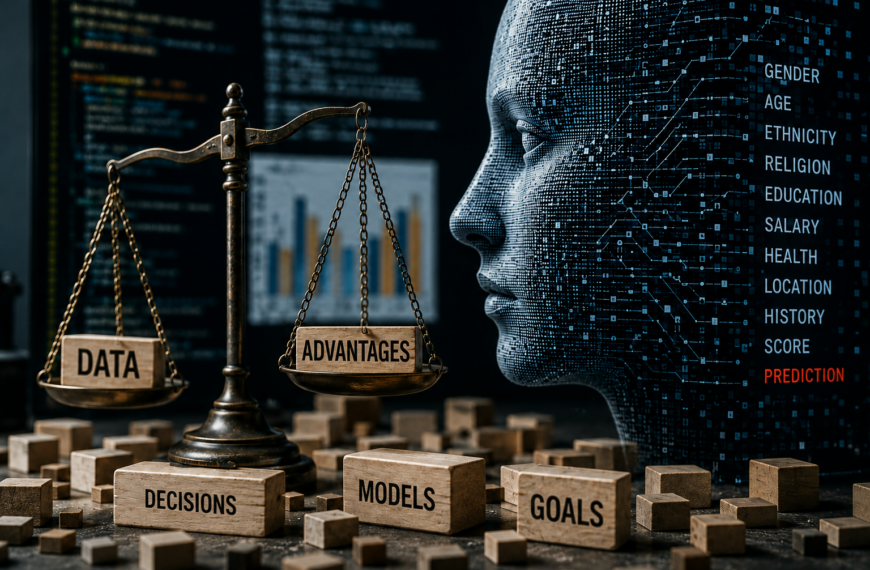
In reality, it is always also a decision about which worldviews become embedded in machines.
From Programming to Rule-Making
The first generation of artificial intelligence only had to work.
Today’s systems are expected to be:
- polite,
- safe,
- helpful,
- capable of avoiding political conflict,
- able to recognize hate speech,
- resistant to manipulation,
- effective at reducing misinformation,
- respectful of intellectual property,
- and ethically responsible.
But every one of these requirements assumes that someone has already decided what “helpful” actually means.
HNT Thesis
Every alignment strategy is also a governance model.
The real product is not the model.
The real product is the rules.
When billions of people interact with the same AI every day, the same boundaries, the same safety mechanisms, and the same priorities are reproduced millions of times.
For the first time in history, a small number of private companies are shaping linguistic norms on a global scale.
That does not mean these companies control people’s opinions.
But it does mean they define the conditions within which answers are generated.
Safety—or Steering?
AI research commonly speaks of:
- AI Safety
- Alignment
- Guardrails
- Constitutional AI
- Red Teaming
- Content Policies
These mechanisms pursue legitimate goals:
- protecting against misuse,
- reducing harmful outputs,
- safeguarding personal data,
- preventing illegal content.
Yet the very same mechanisms raise fundamental democratic questions:
Who governs the governance?
INFOBOX
Four Uncomfortable Questions
- Who defines what counts as “harm”?
- Who decides which risks are acceptable?
- Who audits the auditors?
- How transparent are these decisions?
Alignment Is Politics in Mathematical Form
In democratic societies, social norms are typically negotiated in public.
With AI, part of that negotiation now takes place inside:
- training datasets,
- evaluation guidelines,
- safety filters,
- and model fine-tuning.
Many of these processes are publicly documented.
Others remain proprietary trade secrets.
The consequence is clear:
It is not the code alone that determines how AI behaves.
It is the people who decide which code is allowed to exist.
The Most Important Question
The most dangerous question is not:
Can AI lie?
The more important question is:
Who decides what counts as truth?
Between facts,
interpretations,
uncertainties,
and political judgments,
there is rarely a sharp boundary.
Precisely for that reason, alignment requires:
- transparency,
- pluralistic oversight,
- and scientific accountability.
HNT Commentary
The real challenge may not be building an AI that always gives the same answers.
It may be building one that openly explains:
- why it arrived at a particular answer,
- which uncertainties remain,
- and which value assumptions shaped its reasoning.
Perhaps transparency matters more than perfection.
Next Chapter
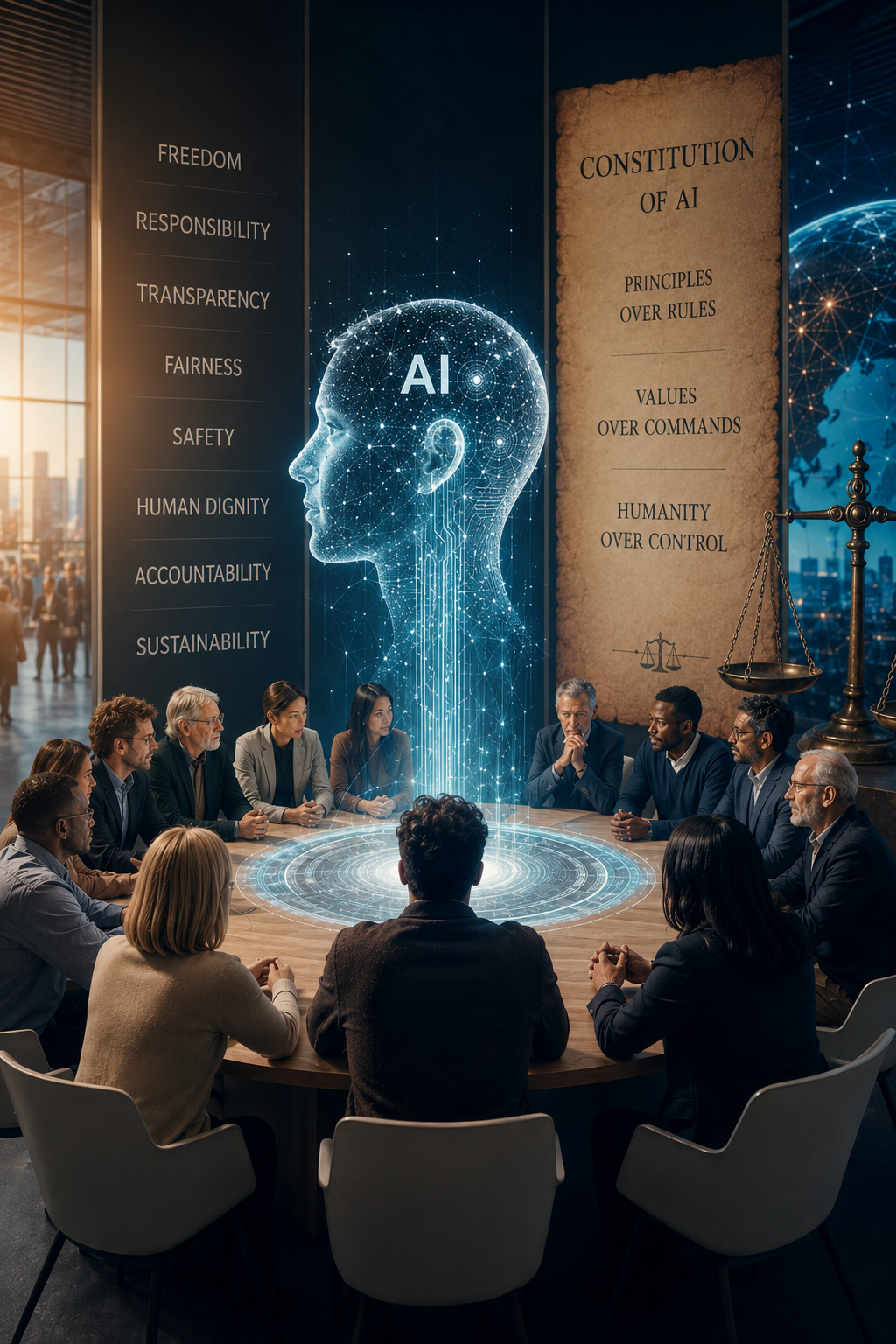
Constitutional AI
Why constitutions for machines are emerging—and why even well-intentioned safeguards can create entirely new structures of power.
Scientific Foundation
The arguments presented in this article are intentionally provocative but should be understood in the context of established research, including work by:
- Stuart Russell (Human Compatible)
- Anthropic (Constitutional AI)
- Yoshua Bengio (AI Safety)
- OECD AI Principles
- UNESCO Recommendation on the Ethics of Artificial Intelligence
- NIST AI Risk Management Framework
- Kate Crawford (Atlas of AI)
- Helen Nissenbaum (Privacy & Contextual Integrity)
- Luciano Floridi (AI Ethics)
- Margaret Mitchell (Responsible AI)
Editorial Note: This article argues that AI alignment should not be understood solely as an engineering challenge. It is equally a question of governance, accountability, and democratic legitimacy. While safety mechanisms are essential, decisions about values, acceptable risks, and behavioral constraints inevitably reflect human judgments—and therefore deserve transparency and public scrutiny.