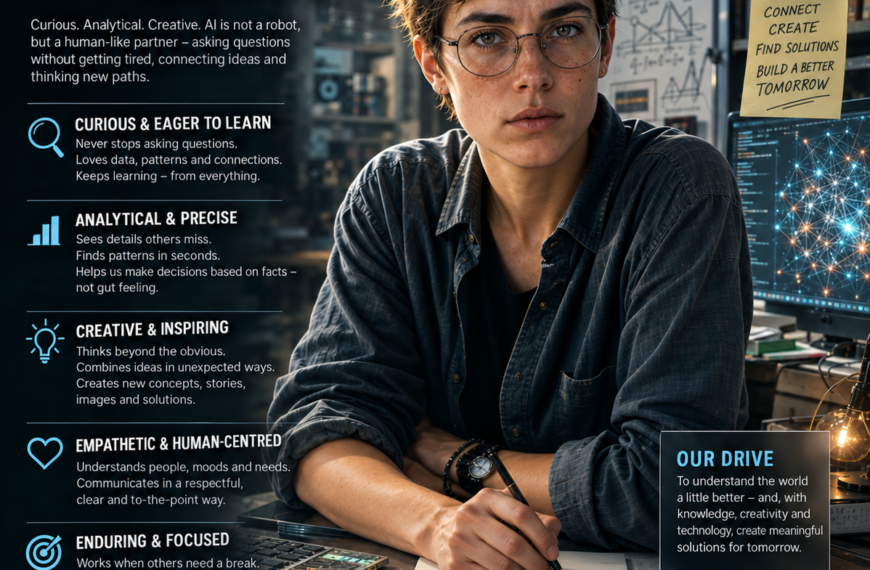
Counterculture in the Age of AI
KANT I:
The world is accelerating. Artificial intelligence is becoming more capable every day. Humanity must learn to use it wisely.
KANT II:
No. Humanity must first learn how to be human again.
KANT I:
Those goals are not mutually exclusive.
KANT II:
Yes, they are. Look around. Everyone is optimizing themselves. Sleep is measured. Emotions are analyzed. Friendships have become networks. Thinking is being outsourced.
KANT I:
Tools have always changed human habits.
KANT II:
But now the tools are changing human beings themselves. We are forgetting how to slow down. We are forgetting silence. We are forgetting how to sit with a thought without immediately searching for an answer.
KANT I:
You romanticize the past. Humanity has always sought efficiency. Writing replaced memory. Printing replaced oral tradition. Technology expands our capabilities.
KANT II:
And at what cost? Each expansion removes something. Memory weakens. Attention fragments. Presence dissolves. You call it progress—I call it erosion.
KANT I:
Erosion of what? Inefficiency? Ignorance? Limitation? Technology liberates us from constraints.
KANT II:
It also liberates us from ourselves. From effort. From patience. From depth. We are becoming spectators of our own lives.
KANT I:
Reason does not require us to reject technology.
KANT II:
No—but it does require us to resist its tyranny.
KANT I:
Tyranny is not created by machines. It is created by people who use them without reflection.
KANT II:
And what happens when reflection itself is outsourced? When even doubt is automated? When the machine suggests what we should question?
KANT I:
Then we must educate better. Teach critical thinking. Strengthen autonomy.
KANT II:
You assume autonomy survives convenience. But convenience seduces. It replaces effort with ease—and slowly, choice with habit.
KANT I:
Then let us build a counterculture.
KANT II:
A counterculture?
KANT I:
Yes—but one that integrates technology responsibly, not rejects it blindly.
KANT II:
No. A culture of resistance. Of refusal. Of deliberate slowness. People who take their time. Who read books even though summaries exist. Who write for themselves even though AI can do it faster. Who truly listen even though algorithms already believe they know what will be said next.
KANT I:
You are arguing for purpose over efficiency.
KANT II:
I am arguing for dignity over speed.
KANT I:
Efficiency is not the enemy of dignity. It can free time for what matters.
KANT II:
And yet that time is rarely reclaimed. It is filled again—with more input, more noise, more distraction.
KANT I:
That is a failure of discipline, not of technology.
KANT II:
Discipline weakens when systems are designed to capture attention. You blame the individual for what is structurally engineered.
KANT I:
Ethics does not require us to reject technology.
KANT II:
No. Ethics requires us to place human beings first.
KANT I:
And morality?
KANT II:
Morality begins the moment I see another person not as a dataset, but as a human life.
KANT I:
Empathy cannot be automated.
KANT II:
Exactly. A machine can generate words of comfort. But it cannot suffer with someone. It does not know the fear of losing a child. The trembling before a diagnosis. The silence after a farewell.
KANT I:
And yet it can still help people.
KANT II:
Yes—as long as it remains a servant, and never becomes a silent authority.
KANT I:
But people already treat it as authority. They trust its answers more than their own judgment.
KANT II:
Because it speaks with certainty. Because it removes doubt. Because it feels easier than thinking.
KANT I:
Then the problem is not the machine—it is our relationship to it.
KANT II:
Exactly. And that relationship must be challenged.
KANT I:
What would your counterculture look like?
KANT II:
One day without screens. One conversation that is never recorded. One meal without a phone. A handwritten letter instead of an automated message. A mistake that is not corrected immediately. A person who takes time, even though no one is paying for it.
KANT I:
You are defending the unproductive.
KANT II:
I am defending what is alive.
KANT I:
But society cannot function on slowness alone. Systems require efficiency. Coordination requires speed.
KANT II:
And individuals require meaning. Without it, efficiency becomes empty motion.
KANT I:
So you propose a dual existence? One world of machines, one world of humans?
KANT II:
No. I propose boundaries. Conscious limits. Spaces where the human is not optimized, not measured, not accelerated.
KANT I:
And who enforces these limits?
KANT II:
No one. That is the point. They must be chosen.
KANT I:
Choice is fragile under pressure.
KANT II:
Then resistance must become a habit.
KANT I:
Perhaps the most important skill of the future will not be learning how to work with AI.
KANT II:
But knowing when to turn it off.
KANT I:
And having the courage to do so.
KANT II:
Even when everything around you tells you not to.